Two Drafts, One Friday: Why Sending Should Always Be Your Call

The Friday email is a familiar scene. You have a draft for a customer, a deadline, and a thread full of context. The draft is good, but it is addressed to the wrong person, or it promises something the account does not support. In most email tools, the moment you press send, that mistake is out of your hands. The message is gone, and the customer has already read it.
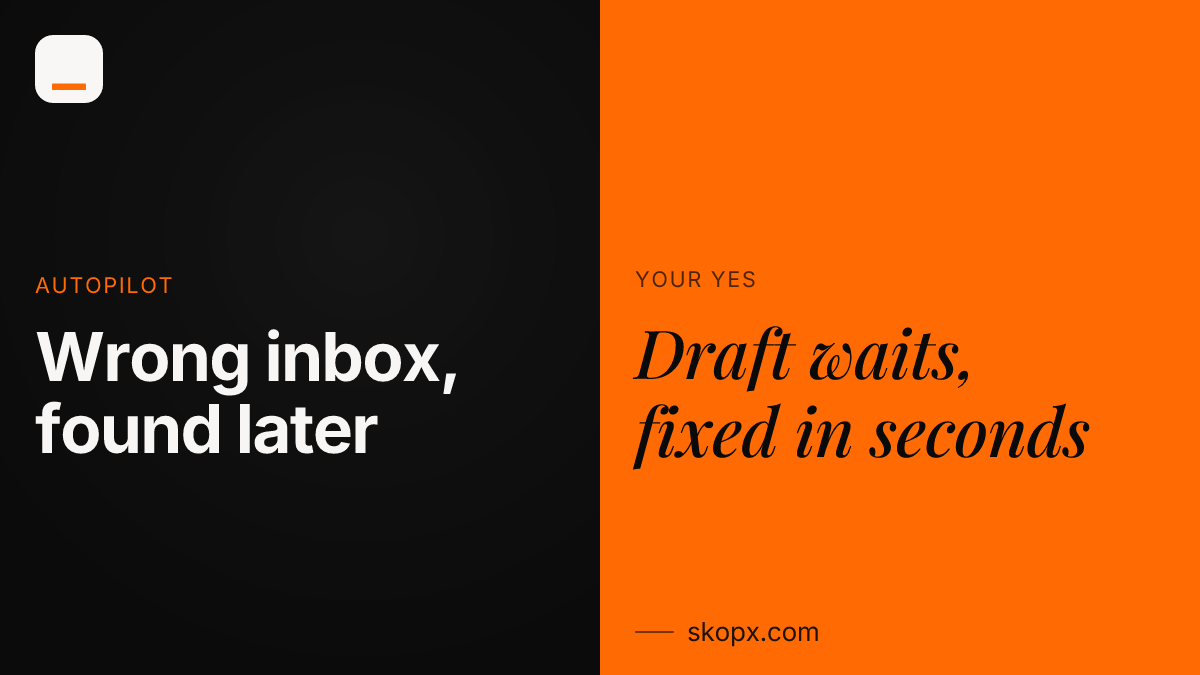
Skopx's Email Agent is built around a different rule. It prepares the draft, pulls the relevant history into the thread, and then waits. It sends only when you say send. The difference sounds small until you picture the two endings it creates. In one, the draft has already landed in the wrong customer's inbox. In the other, the same draft sits in the thread, and you spend about ten seconds correcting the recipient before anything leaves your hands.
Why the Last Step Matters Most
Most of an AI assistant's work is preparation: reading, summarizing, drafting, looking things up. Those steps are reversible. A wrong summary can be ignored. A wrong draft can be rewritten. The step that cannot be reversed is sending, and that is the step where an assistant most needs a human in the loop.
Skopx treats sending as an explicit action, separate from drafting. The agent can gather what it needs, check the tone against the earlier messages in the thread, and flag anything that looks off, such as a recipient who does not match the account history or an amount that differs from the invoice on file. What it will not do is decide, on its own, that the moment is right to send.
This is a deliberate choice, and it has costs. Some people would prefer an assistant that clears their outbox while they sleep. For routine, low-stakes messages that might feel efficient. For customer communication, where a single misdirected message can damage trust or leak information, the wait is cheap insurance.
What the Ten Seconds Look Like
When the draft is waiting, the review is quick. You see the recipient, the subject, the body, and any notes the agent attached about what it pulled from the account. If the recipient is wrong, you change it. If a sentence overpromises, you cut it. If everything is correct, you say send, and the message goes.
The point is that the check is fast because the agent did the slow work first. You are not rebuilding the message from scratch. You are reviewing a finished draft and making the one decision only you can make.
Read Access, Write Access, and the Line Between Them
It is worth being clear about what the agent can do before any email goes out. It reads the customer record, the thread history, and the account details it has been granted. It drafts. It does not send on its own initiative, and it does not change records in the background to make a message look more complete. Keeping those boundaries narrow is what makes it reasonable to let an agent work on a live customer thread at all.
A Small Habit That Adds Up
Think about the Friday email as a habit rather than a single event. If your assistant drafts every message and waits for your yes, your week is full of small, checked decisions instead of occasional expensive mistakes. You stay in control of what your company says to customers, and the assistant handles the tedious parts of getting there.
That is the whole idea behind Skopx. AI should make the work faster, but the final word on anything customer-facing should stay with the person whose name is on the message. Two drafts, one Friday, and the only difference between them is whether you got to look first.