Automated Data Utilization Explained for Decision-Makers
Automated data utilization is defined as the use of software and AI-driven systems to automatically collect, process, analyze, and apply data throughout its lifecycle with minimal human input. For professionals focused on operational efficiency, this concept sits at the center of every modern data strategy. The automated data processing sector is projected to grow at a compound annual growth rate exceeding 30% from 2023 to 2027. That growth reflects how urgently organizations need systems that handle data ingestion, validation, transformation, and delivery without constant manual oversight. Understanding automated data usage is no longer optional for decision-makers. It is the foundation of competitive operations.
What is automated data utilization, and how does it work?
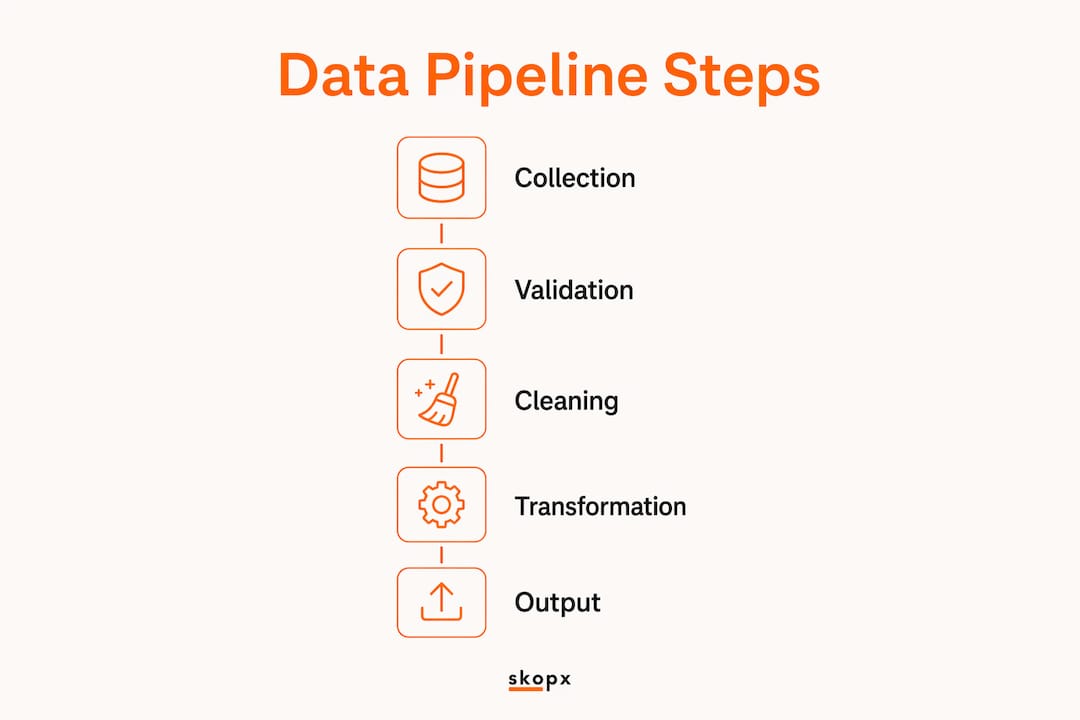
Automated data utilization describes a pipeline of connected processes that move data from its source to a usable destination without human intervention at each step. The pipeline typically runs in four stages: collection, validation, transformation, and delivery.
Collection happens through three main methods. Streaming ingestion pulls data continuously from live sources like IoT sensors or transaction systems. Batch processing gathers data in scheduled intervals, such as nightly database exports. API-based collection fetches data from third-party platforms on demand. Each method suits different latency needs.

Validation and cleaning follow collection. The system checks incoming data against defined rules, flags anomalies, removes duplicates, and fills or rejects incomplete records. Clean data is the single biggest factor in AI model accuracy. Skipping this step produces outputs that mislead rather than inform.
Transformation converts raw data into a structured, analysis-ready format. This includes joining datasets, applying business logic, and enriching records with external context. Delivery then routes the finished data to a warehouse, dashboard, or downstream application.
Pro Tip: Complete the transformation layer before using any data output. Half-transformed data is more unreliable than no data at all.
The distinction between batch and streaming matters for decision-making speed. Batch pipelines work well for weekly reports. Streaming pipelines power real-time fraud detection or live inventory management. Choosing the wrong method for the use case creates either unnecessary cost or unacceptable lag.
What are the benefits and challenges of automated data utilization?
The benefits of automated data utilization are concrete and measurable across most industries.
- Scalability. Automated pipelines handle growing data volumes without adding headcount. A system processing one million records today can handle ten million tomorrow with configuration changes, not hiring.
- Accuracy and consistency. Automation removes manual entry errors and applies the same rules every time. Human analysts introduce variation. Automated systems do not.
- Data liquidity. High data liquidity means data is easy to reuse and recombine across teams and use cases. Organizations with high data liquidity outperform peers in speed to market and customer experience. Treating data as a reusable product rather than a one-time byproduct is what separates fast-moving organizations from slow ones.
- Time savings. Teams stop spending hours on manual exports and report assembly. That time shifts to analysis and decision-making.
The challenges are equally real and often underestimated.
- Data ambiguity. Automated systems apply rules literally. When source data is ambiguous or inconsistently labeled, the pipeline produces confident but wrong outputs.
- Retrieval failure. AI agents and query systems sometimes fail to locate the right data, especially across fragmented or poorly documented sources.
- Latency tradeoffs. Faster pipelines cost more to run. Real-time streaming requires infrastructure that batch processing does not.
- Governance and trust. Without lineage tracking and audit trails, teams cannot verify where a number came from. That erodes confidence in automated outputs.
Pro Tip: Build autonomous knowledge systems that embed semantics, lineage, and constraints directly into the pipeline. This reduces retrieval errors and makes AI outputs auditable without manual review.
What are practical strategies for implementing automated data utilization?
Successful implementation follows a disciplined sequence. Skipping steps creates compounding problems that are expensive to unwind.
-
Start with one high-value data source. Build a complete end-to-end pipeline for a single source before expanding. This avoids infrastructure overload and forces the team to solve real problems at small scale before they become large-scale failures.
-
Run the pipeline manually before scheduling it. Test the pipeline manually for at least a week before automating. Manual runs surface bugs that only appear with real data. Automating a broken pipeline does not fix it. It runs the broken process faster and at higher volume.
-
Build a semantic layer. A semantic layer defines business terms, metric calculations, and relationships in a way the system can interpret consistently. Without it, the same question asked two different ways produces two different answers.
-
Add lineage tracking. Lineage graphs record where each data point originated and what transformations it passed through. When a number looks wrong, lineage lets teams trace it back to the source in minutes rather than days.
-
Integrate AI agents incrementally. Start with AI handling a narrow set of well-defined queries before expanding its scope. An automated pipeline that generates a daily business brief, for example, is a low-risk starting point that builds team confidence in the system.
-
Monitor and refine continuously. Pipeline health degrades as source systems change. Set alerts for schema changes, volume drops, and latency spikes. Treat the pipeline as a product that requires ongoing maintenance, not a one-time build.
What role do AI and autonomous agents play in automated data utilization?
AI agents represent the most significant shift in how organizations utilize data automatically. They move beyond static dashboards by answering questions in natural language, detecting anomalies, and generating insights without a human writing a query.
The performance numbers are striking. AI agents for analytics can automate 95% of business queries with approximately 95% aggregate accuracy. That accuracy comes at a cost: 72% higher latency and 32% more token consumption compared to direct query methods. Decision-makers need to weigh those tradeoffs against the value of always-on, self-service analytics.
The architecture behind reliable AI agents matters as much as the agent itself.
- Semantic layers narrow the scope of queries so agents interpret business terms correctly rather than guessing.
- Curated knowledge bases give agents a library of pre-validated query patterns. Adding semantic layers and skills improves AI agent accuracy from roughly 21% to over 95%.
- Adversarial review runs a second agent to check the first agent's output before it reaches the user. This catches errors that would otherwise go unnoticed.
- Provenance tracking records which data sources and logic an agent used to produce an answer, making outputs auditable.
Platforms that integrate AI with legacy enterprise data for cross-system intelligence are closing the gap between raw data and real-time decisions. Skopx connects with nearly 1,000 integrations, enabling AI-driven data analytics without requiring SQL expertise or custom dashboard builds.
How does automated data utilization support data-driven decision-making?
Automated data utilization changes the economics of insight generation. Teams that previously spent days assembling reports now receive answers in minutes. That speed compounds across every decision cycle.
The table below maps common business questions to the automated workflows that answer them.
| Business question | Automated workflow | Outcome |
|---|---|---|
| Why did revenue drop last Tuesday? | Anomaly detection pipeline flags variance and traces root cause | Root cause identified in minutes |
| Which customers are at churn risk? | Scoring model runs nightly on CRM and usage data | Prioritized outreach list ready each morning |
| Is inventory sufficient for next week? | Demand forecast pipeline reads sales and supply data | Reorder triggered automatically when threshold is crossed |
| How is campaign performance trending? | Marketing data aggregated and summarized daily | Brief delivered to team without manual export |
Autonomous knowledge platforms integrate data, AI, and governance into an always-on system that delivers trusted insights at scale. The governance component is what makes outputs usable in high-stakes decisions. Without it, speed creates risk rather than value.
Automated pipelines also free analysts from repetitive data preparation. That shift lets teams focus on interpreting results and acting on them, which is where human judgment still adds the most value. AI transformation for enterprise operations works best when automation handles the mechanical work and people handle the strategic response.
Key Takeaways
Automated data utilization delivers reliable, scalable insights only when pipelines are fully transformed, manually tested, and governed with semantic layers before AI agents are introduced.
| Point | Details |
|---|---|
| Complete transformation first | Never use data before the transformation layer is finished; partial outputs produce unreliable results. |
| Test manually before automating | Run pipelines by hand for at least a week to catch bugs before scheduling automation. |
| Semantic layers drive accuracy | Adding a semantic layer and curated knowledge base lifts AI agent accuracy from 21% to over 95%. |
| Data liquidity accelerates decisions | Organizations that treat data as a reusable product outperform peers in speed to market and customer experience. |
| Governance makes speed safe | Lineage tracking and audit trails are what allow automated outputs to be trusted in high-stakes decisions. |
The discipline gap no one talks about
Most organizations underinvest in the unglamorous middle of the data pipeline. They buy AI tools before they have clean, well-governed data to feed them. The result is confident-sounding outputs built on shaky foundations.
Working closely with enterprise data systems makes one pattern clear: the teams that succeed with automated data utilization are not the ones with the most sophisticated AI. They are the ones that spent time on data quality, semantic modeling, and lineage tracking before they ever touched an AI agent. The 95% accuracy figure for AI analytics agents is real, but it assumes a mature semantic layer underneath. Without that layer, the same agents produce roughly 21% accuracy. That gap is not a technology problem. It is a discipline problem.
The future of automated data utilization points toward fully autonomous knowledge systems that continuously update their own semantics and constraints as the business changes. That future is closer than most decision-makers realize. The organizations building disciplined pipelines today will be the ones ready to deploy autonomous systems without a painful rebuild. The ones skipping steps now will face that rebuild at the worst possible time.
Skopx Team
How Skopx helps teams put automated data to work
Skopx connects nearly 1,000 data integrations into a single AI-driven interface, letting teams query their data and trigger actions in real time without writing SQL or building custom dashboards. For organizations ready to move from manual reporting to autonomous AI agents, Skopx provides the infrastructure to do it at scale. For teams that need a strategy before they build, Skopx AI Consulting Services covers everything from pipeline architecture to semantic layer design and governance frameworks. The goal is the same in both cases: turning raw data into decisions your team can act on today.
FAQ
What is automated data utilization in simple terms?
Automated data utilization is the process of using software to collect, clean, transform, and deliver data without manual steps at each stage. The goal is to make data available for decisions faster and more consistently than human-managed processes allow.
What is the difference between batch and streaming data processing?
Batch processing collects and transforms data in scheduled intervals, such as nightly runs, while streaming processing handles data continuously as it arrives. Batch suits historical reporting; streaming suits real-time decisions like fraud detection or live inventory tracking.
How accurate are AI agents at answering business data questions?
AI agents can automate approximately 95% of business analytics queries with about 95% aggregate accuracy when supported by a curated semantic layer and knowledge base. Without those layers, accuracy drops to roughly 21%.
Why does data governance matter in automated pipelines?
Governance provides lineage tracking and audit trails that let teams verify where a number came from and what logic produced it. Without governance, automated outputs cannot be trusted in high-stakes decisions, regardless of how fast they arrive.
How should a team start implementing automated data utilization?
Start with a single high-value data source, build the full pipeline end-to-end, and run it manually for at least a week before scheduling automation. This approach catches bugs early and builds team confidence before expanding to additional sources.
Share this article
Skopx Team
The Skopx engineering and product team