Data-Driven Team Decisions: Real Examples That Work
Data-driven team decisions are choices made by groups using verified data, metrics, and analytics rather than intuition or seniority. The most effective examples of data-driven team decisions share one trait: the right data reaches the right person at the right moment, with a clear protocol for action. Across healthcare, SaaS, and marketing, teams that build this discipline consistently outperform those that rely on the highest-paid person's opinion, a bias researchers call the HiPPO effect. This article breaks down real cases, proven frameworks, and the structural prerequisites that make data-informed choices stick.
1. Predictive sepsis alerts that cut hospital mortality
Healthcare teams produce some of the most compelling examples of analytics in teams because the stakes are immediate and measurable. HCA Healthcare routed predictive sepsis alerts directly to bedside nurses, paired with clear action protocols. The result was a 22.9% reduction in sepsis mortality across 173 hospitals.

The key design choice was who received the alert. Physicians manage many patients simultaneously. Nurses are at the bedside and can act within minutes. Routing data to the person with the fastest response time multiplied the model's real-world impact.
Three structural factors made this work:
- A standardized electronic health record environment across all 173 hospitals
- Alerts formatted as specific, actionable steps rather than raw probability scores
- Workflow integration that placed the alert inside the nurse's existing task flow
Pro Tip: When deploying any predictive model, identify the team member who can act most rapidly on the output. Route the alert to that person, not the most senior one.
2. Churn prediction that rebuilt a SaaS customer success team
Customer success managers at a $25M B2B SaaS company were drowning in ad-hoc data requests. Leadership built a churn prediction model with 82% precision that ran nightly risk scoring across the entire customer base.
Each morning, customer success managers received a ranked list of at-risk accounts. For each account, the model surfaced the top three risk factors in plain language. Managers did not need to interpret raw data. They acted on a clear explanation and made targeted outreach calls.
The business results were significant:
- Net revenue retention climbed from 95% to 108%.
- Ad-hoc data requests dropped by 60%.
- Customer success managers shifted from reactive firefighting to planned, proactive outreach.
The cultural shift mattered as much as the model itself. Leadership used this churn model as a flagship analytics win to demonstrate that data infrastructure could be trusted. Teams that had relied on spreadsheet shadow reporting began adopting the central platform. One visible, high-impact use case changed behavior across the entire organization.
Pro Tip: Build your first model around the problem that causes the most visible pain. A win on a high-stakes problem converts skeptics faster than any training session.
3. Campaign data patterns that generated $75M in lift
Marketing teams often make decisions based on recent results or gut feel. A team that analyzed 1.5 years of campaign data took a different approach. They codified six repeatable patterns from aggregated historical campaigns, three labeled "do this" and three labeled "avoid this."
The patterns carried dollar values. Sharpening audience targeting during periods of healthy brand momentum produced a +58% year-over-year sales lift. The team could point to a specific tactic, a specific condition, and a specific outcome. That specificity made the decision defensible to leadership and repeatable across future campaigns.
| Pattern type | Example tactic | Measured outcome |
|---|---|---|
| Do this | Sharpen targeting during brand momentum | +58% YoY sales lift |
| Do this | Consolidate spend in proven channels | Reduced wasted budget |
| Avoid this | Broad targeting during low brand awareness | Negative ROI on spend |
Documenting decisions alongside their data rationale also protected the team from personnel turnover. When a campaign manager left, the logic behind every major choice lived in the record, not in someone's memory. For marketing teams building this kind of intelligence layer, the compounding effect grows with every campaign cycle.
4. Decision frameworks that protect teams from bias
The HiPPO effect is not just a cultural problem. Research shows 37% of employees agree with decisions they privately oppose because a senior leader expressed a preference first. That silent disagreement kills the accuracy of group decisions.
Structured decision frameworks address this directly. Five modes cover most team scenarios:
- Unilateral: One person decides. Fast, but limited to low-stakes or time-critical choices.
- Consultative: The decision-maker gathers input before deciding alone. Balances speed with perspective.
- Consensus: The group agrees. Slow, but builds strong commitment.
- Consent: No one objects strongly enough to block. Faster than consensus, still inclusive.
- Disagree-and-commit: Dissent is fully heard, then the team commits to one direction.
The five decision modes each suit different urgency and complexity levels. Choosing the wrong mode for the context is itself a decision error.
"Independent assessment before group discussion improves accuracy in distributed-information decisions. When team members write down their views before hearing others, the group captures more of the available information and reduces anchoring to the first opinion voiced."
The "independent-write-share-discuss" protocol operationalizes this. Each person writes their assessment privately, shares it simultaneously, then the group discusses. Senior leaders speak last. This single change reduces HiPPO-driven bias without requiring a culture overhaul.
5. Timeboxing to break analysis paralysis
Teams with strong analytical skills face a specific failure mode: they keep analyzing instead of deciding. More data always feels safer. But delayed decisions have real costs, including missed market windows, stalled projects, and team frustration.
Timeboxing sets a hard deadline on the analysis phase. The team agrees in advance: "We will decide by Thursday with the data available." This forces prioritization of the most critical metrics and prevents the endless search for certainty.
Meta-analysis strengthens this approach. Rather than running one more test, teams synthesize multiple results to isolate stable patterns from noise. A single campaign result might be an outlier. Five consistent results across different segments become a reliable signal. Meta-analysis gives teams the confidence to act without demanding perfect data.
Guardrails also help. Not every decision requires a measurable conversion lift. Qualitative changes, like redesigning an onboarding flow or updating internal documentation, need different success criteria. Teams that apply the same quantitative bar to every decision create unnecessary friction and slow their own progress.
6. Best practices for embedding data-driven decisions in team workflows
The structural prerequisites for sustainable data-driven decisions are not optional. Data architecture and workflow integration determine whether a model produces impact or collects dust. A technically excellent model that outputs to a spreadsheet no one checks will not change behavior.
Four practices separate teams that sustain data-driven decisions from those that revert to gut feel:
- Standardize data sources. Teams that pull from multiple inconsistent sources train their models on noise. A single source of truth is a prerequisite, not a nice-to-have.
- Build self-serve access. When team leads can query data without filing a request to the analytics team, decision speed increases significantly. Self-service analytics platforms make this possible without requiring SQL skills.
- Document every decision and its data rationale. This protects institutional knowledge and enables post-decision review.
- Use flagship wins to build trust. Deploy your first model on a high-visibility problem. A clear win converts skeptics and reduces shadow reporting.
Pro Tip: Train team leads to use self-serve dashboards for their most common questions. When leaders model data fluency, their teams follow. Pair the tool access with a 30-minute walkthrough, not a 10-page manual.
For customer success teams specifically, self-serve access to account health data removes the bottleneck between insight and action. The faster a manager can see a risk signal, the faster they can respond.
Key takeaways
The most impactful data-driven team decisions share one design principle: actionable data reaches the person who can act on it fastest, with a clear protocol attached.
| Point | Details |
|---|---|
| Route alerts to fast actors | Send data outputs to the team member who can respond most quickly, not the most senior one. |
| Use flagship wins first | Deploy your first model on a high-stakes, visible problem to build trust across the team. |
| Apply structured decision modes | Match the decision framework (unilateral, consent, disagree-and-commit) to the urgency and complexity of the choice. |
| Timebox analysis phases | Set a hard decision deadline to prevent analysis paralysis and force prioritization of key metrics. |
| Standardize data architecture | A single source of truth is a structural requirement, not a preference, for reliable team decisions. |
What I've learned about getting teams to actually trust data
The hardest part of building data-driven teams is not the technology. It is the moment when a team member looks at a model's recommendation and says, "I don't think that's right." That moment happens in every organization, and how you handle it determines whether the culture shifts or snaps back.
My experience with teams across different industries shows that the fastest path to trust is a win they can see and feel. Not a dashboard. Not a training session. A real decision, made with data, that produced a better outcome than the previous gut-feel approach. The churn prediction example is instructive: the model did not just produce a score. It explained the top three risk factors in plain language. That explanation is what converted skeptics. People resist black boxes. They adopt tools they can understand.
The second thing I've learned is that the "disagree-and-commit" mode is underused and often misapplied. Teams treat it as a way to silence dissent. It is the opposite. It requires full, genuine hearing of every objection before the group commits. When done correctly, it produces faster decisions with stronger follow-through than consensus ever does.
Speed and rigor are not opposites. Timeboxing does not mean cutting corners. It means deciding in advance what "good enough data" looks like for this specific decision. That discipline, applied consistently, is what separates teams that learn fast from teams that stay stuck.
Skopx Team
How Skopx helps teams put data to work
Teams that want to move from ad-hoc analysis to consistent, data-informed decisions need more than good intentions. They need infrastructure that makes data accessible without requiring a data science degree.
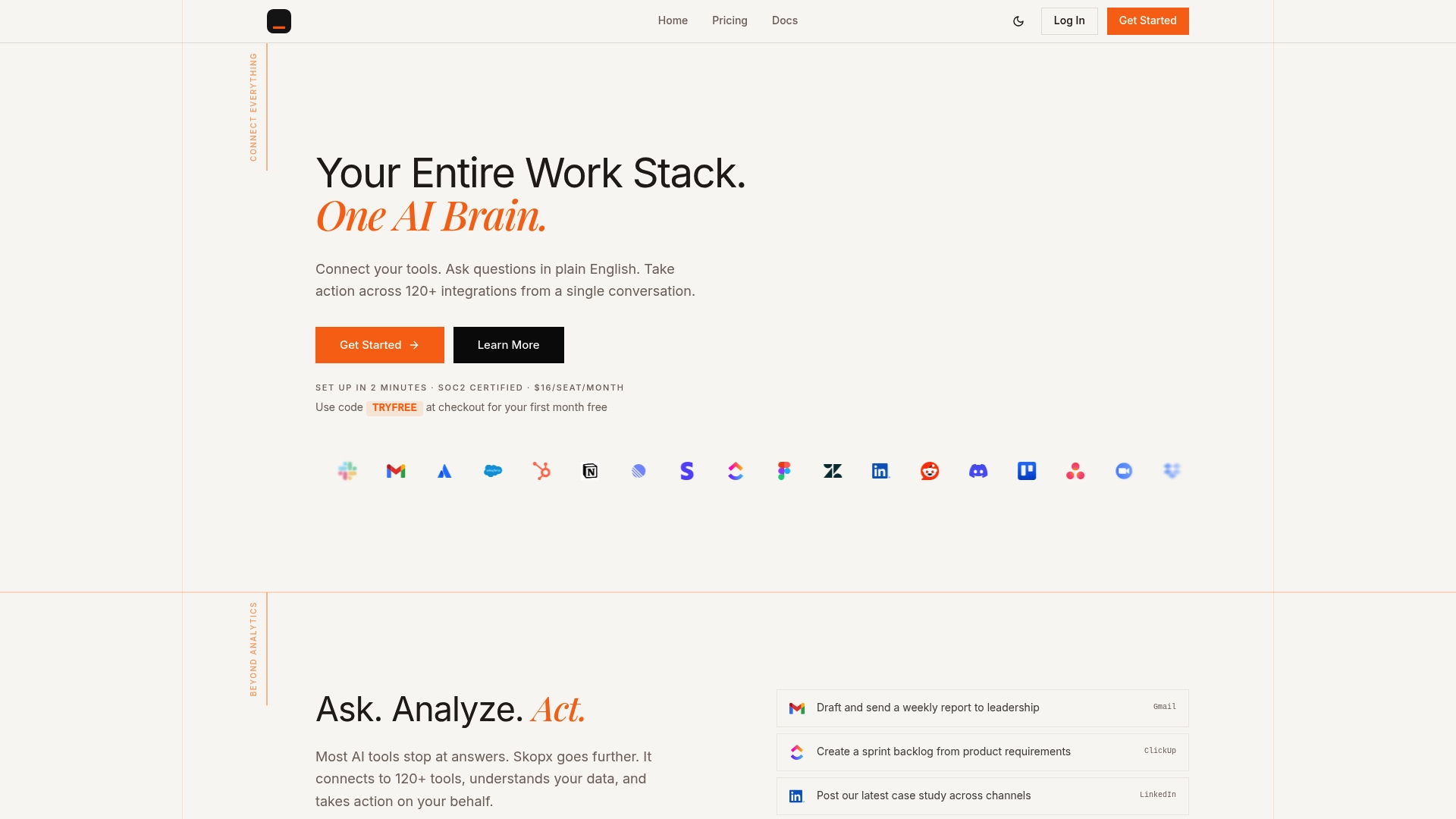
Skopx connects with nearly 1,000 integrations and gives team leads the ability to query their data in plain language, in real time. Morning briefings and automated insights help organizations build an analytics habit that fits their team structure and decision workflows. For teams ready to automate recurring analysis, the AI Data Analyst platform delivers automated insights without SQL or dashboard configuration. Skopx also offers AI agents that execute data-driven workflows autonomously, reducing the manual steps between insight and action. The result is a team that decides faster, with better information, and less operational overhead.
FAQ
What are examples of data-driven team decisions?
Data-driven team decisions include routing predictive sepsis alerts to nurses with action protocols, using churn models to guide customer success outreach, and applying historical campaign patterns to set marketing tactics. Each example connects a specific data output to a specific team action with a measurable result.
How does the HiPPO effect hurt team decision-making?
Research shows 37% of employees agree with decisions they privately oppose when a senior leader speaks first. Structured protocols like "independent-write-share-discuss" and having senior leaders speak last reduce this bias and improve group accuracy.
What is the fastest way to build a data-driven team culture?
Deploy your first model on a high-visibility, high-stakes problem and make the win visible to the whole team. A single clear success with data builds more trust than months of training or dashboard rollouts.
How do teams avoid analysis paralysis?
Teams avoid analysis paralysis by timeboxing the analysis phase with a hard decision deadline and using meta-analysis to distinguish stable patterns from noise. Setting clear criteria for "good enough data" before the analysis begins prevents indefinite delay.
What decision framework works best for data-driven teams?
The best framework depends on urgency and complexity. Consultative mode works for most day-to-day decisions. Disagree-and-commit works when strong dissent exists but a deadline requires resolution. Data visualization best practices also help teams communicate findings clearly before any decision mode is applied.
Recommended
Share this article
Skopx Team
The Skopx engineering and product team